


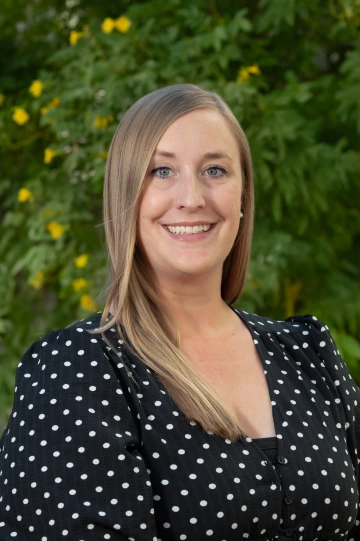
Instructors:
Jacqueline Melvold & Kat Riesing
Mon/Wed | 9:30 - 10:45 AM | In-Person
Spring 2027
Fulfills: GE Building Connections | Honors Seminar
An introductory course in the Creative Intelligence and Innovation (CII) program, Problems to Possibilities will give you the ability to reframe a problem so that it becomes a possibility--a true superpower you can apply in multiple ways throughout your life!
During this application-driven course, you'll work with an industry partner to address a real challenge they are facing. As part of that, you will evaluate and analyze complex problems within dynamic systems through different lenses.Then, you will apply this analysis to collaboratively develop novel potential solutions, presented through different visualization and modeling techniques.
Past partners have included The American Red Cross, Old Tucson Studios, Honeywell Aerospace, and Goodwill of Southern Arizona.

What students are saying about Problems to Possibilities
[Problems to Possibilities] was an excellent complement to my main degree, as I was studying the how and the what of technical studies in my main degree, and this course taught me the why and the who. It has left me with a human lens, and I'm going to use it for any technical challenge that I am presented with in my future career.
This semester in Problems to Possibilities, I definitely experienced one of the most unique classes I have ever taken in my life. In many ways, I grew into a new person with new skills that have transformed my modes of ordinary thinking for the better. But alongside this transformation, I also found myself connecting to this inner child-like curiosity, showcasing how going back to the basics can make creativity and innovation much more about reflection than evolving into something new.
It was a great experience learning how to open a new lens of creativity and curiosity towards problem solving. As a Biomedical Engineering and Micro-Cellular Biology student, creativity is not always treated as the core value. Instead, the focus is often on memorization, technical precision, and applying things in just the right way. However, in this course there was no right way. I was reminded that innovation does not only emerge from technical ways of knowing, but also from imagination, empathy, teamwork, and the willingness to question assumptions.
A major capability that stood out to me was learning to be confident in my creative skills. Before this course, I often associated creativity more with artists than with scientists and engineers. However, brainstorming activities, collaborative discussions, and design-thinking exercises showed me that creativity is a skill that can be intentionally developed and is necessary for every part of life. Over time, I became more comfortable sharing silly ideas with my team without getting embarrassed. This changed the way I approach challenges in my academic life because I now see problems as opportunities for exploration instead of something with a fixed solution. It makes me feel less anxious about learning new topics or sharing wrong answers.
This process helped me understand that innovation carries responsibility. Future thinking and responsible innovation encourage people like me to move beyond simply asking “how can we do this?” and instead ask “Who does this help, and what future does it create?” These lessons will strongly influence the way I approach future scientific, engineering, and healthcare innovations throughout my career.